
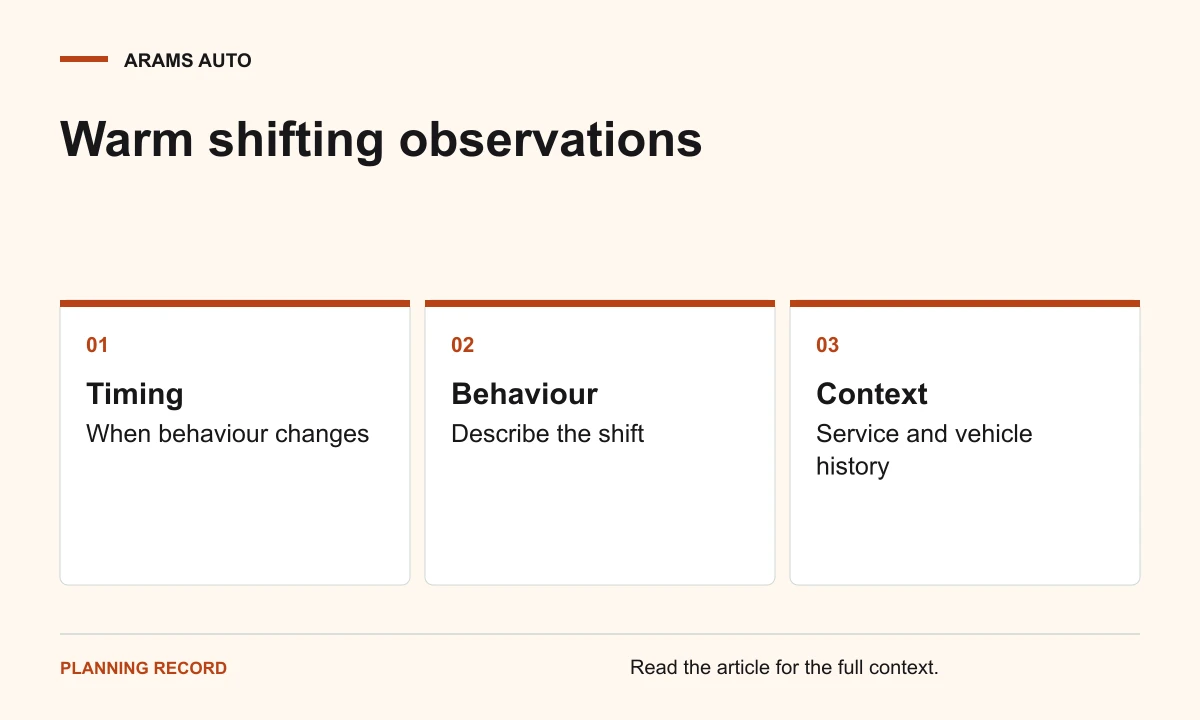
A transmission that behaves differently after the vehicle warms up needs a description of the change and its timing. Do not assume the temperature pattern identifies a failed part or that adding a product will resolve it.
Capture normal-use observations
Describe the affected shift or operating situation in ordinary terms: delay, unusual movement or a change you can notice. Record whether the concern appears shortly after starting or later in a normal trip, and include visible warnings.
Do not deliberately stress the vehicle to reproduce the symptom. Follow the owner's guidance and ask the shop whether continued driving or transport is appropriate for the reported behaviour.
Add the maintenance context
Share the make, model, year, mileage and previous transmission-related work. Include recent service records and whether the symptom began before or after that work. Avoid resetting warnings or treating another owner's account as your vehicle's diagnosis.
Ask the shop what the assessment will cover and how findings will be explained before repairs are authorized. Preserve the diagnostic and repair records so a recurring warm-operation concern can be compared with the original report.
Review engine and transmission services and contact Arams Auto with the timing and service history.